
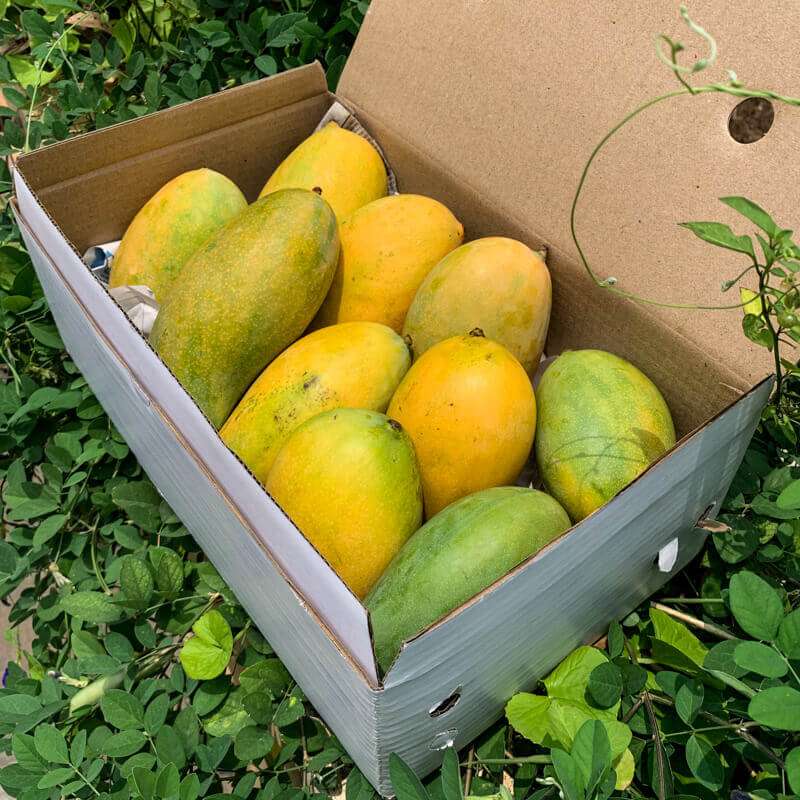
How to Choose a Ripe Mango: What Aroma, Feel and Colour Can Tell You
Share
Choosing a mango is easier when you separate two questions: “Is it ripe enough to eat?” and “How was it ripened?” Touch and aroma can help with the first. They cannot reliably answer the second.
Check the variety first
Mango colour differs naturally. A ripe Langra may remain green, while other varieties become more yellow or orange. Ask which variety you are buying before using colour as a guide.
Use a gentle touch
A mango that gives slightly under gentle pressure may be ready to eat. Avoid squeezing hard, which can bruise the fruit. Firm mangoes can continue to soften at room temperature.
Notice the aroma
A ripe mango may smell fruity near the stem. Aroma varies by variety and ripeness, so use it alongside firmness rather than as a pass-or-fail test.
These signs do not verify the ripening method
Colour, aroma, softness and simple water tests cannot reliably prove whether a mango ripened on the tree or was treated after harvest. Ask the grower or seller about the process. FSSAI’s fruit-ripening guidance explains the rules for calcium carbide and controlled ethylene use.
At ASD Orchards
Our mangoes are allowed to ripen naturally on the tree. We do not use calcium carbide or artificial ripening agents. Crop-protection products, when needed during cultivation, are separate from ripening.
Related from ASD Orchards
Explore the related product details and seasonal availability:
 Have a question? Chat with us on WhatsApp!