
Can You Tell How a Mango Was Ripened? What Shoppers Should Know
Share
Shoppers often ask how to identify a naturally ripened mango. The honest answer is that you can judge whether a fruit seems ripe to eat, but you cannot reliably establish its full ripening history from its appearance alone.
What colour can tell you
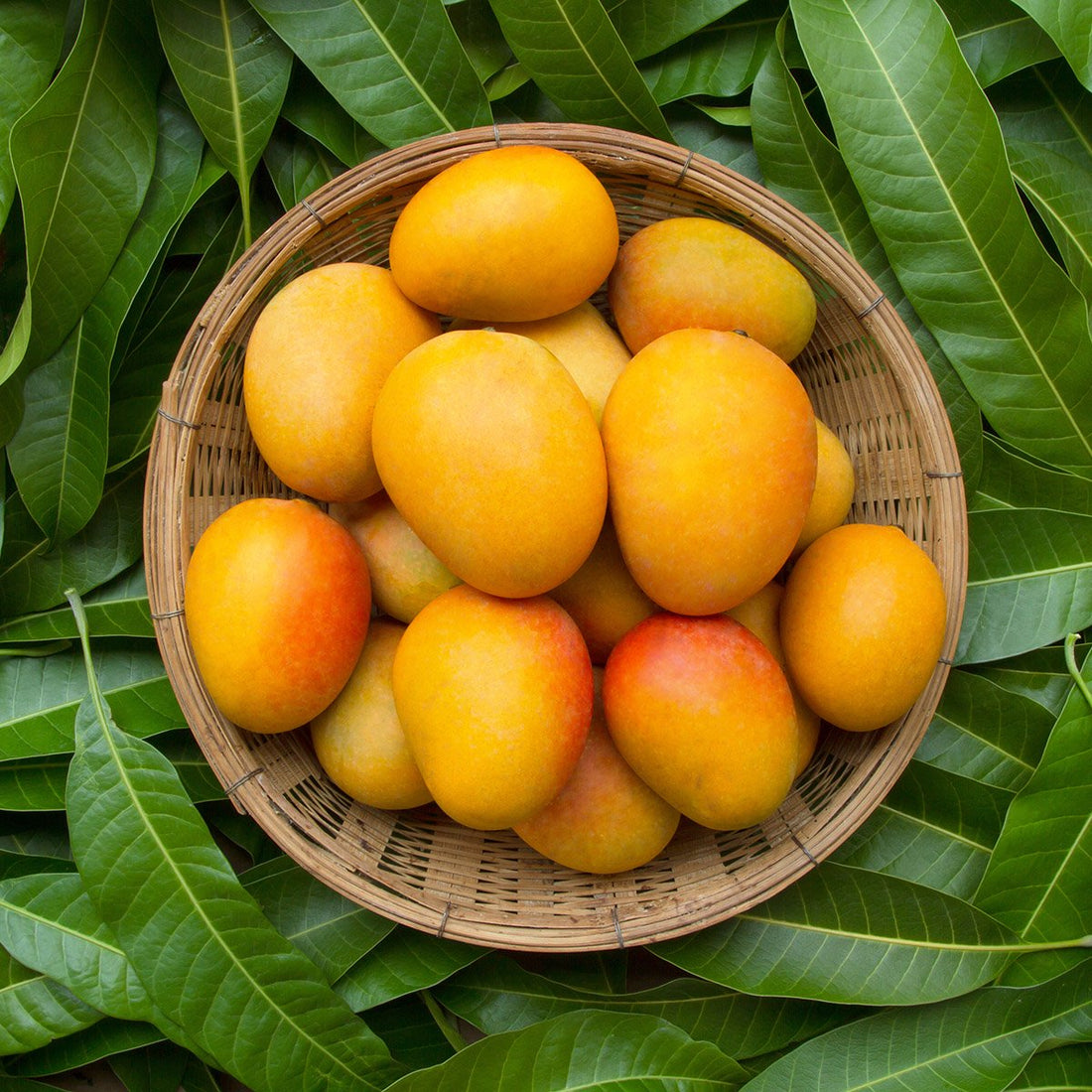
Colour varies by mango variety. Some ripe mangoes stay green, while others develop yellow, orange or red tones. A uniform colour is not proof of a particular ripening method.
What aroma and softness can tell you
A fruity aroma near the stem and a gentle give when pressed can be useful signs that a mango may be ripe. They are not a reliable test for calcium carbide or any other post-harvest treatment. Handle the fruit gently; pressing hard can bruise it.
Ask about the source and method
If the ripening method matters to you, ask the seller how the fruit was grown, harvested and handled. FSSAI prohibits calcium carbide for artificial ripening and describes controlled ethylene ripening under prescribed conditions in its guidance note.
Our practice at ASD Orchards
We allow our mangoes to ripen naturally on the tree and do not use carbide or artificial ripening agents. Crop-protection practices during growing are a separate matter from ripening.
For practical storage advice after delivery, see our mango-storage guide. Keep unripe fruit at room temperature and refrigerate ripe fruit if you are not eating it soon.
Related from ASD Orchards
Explore the related product details and seasonal availability:
 Have a question? Chat with us on WhatsApp!